Three things decide whether a TV stand works: it is the right width for the TV, the right height for your couch, and good at hiding the small ecosystem of cables and boxes that lives behind every television. Nail those and the rest is just picking a finish you like.
The width rule: the stand beats the TV
The stand should be wider than the television, full stop. A TV that hangs over both ends of its stand looks top-heavy and faintly anxious, like it might tip forward during a tense scene. Measure your TV by its actual width, not the diagonal screen size the box advertises, and buy a stand that extends at least a few inches past each side.
The quick translation: a 55-inch TV wants a stand around 60 inches or wider, a 65-inch TV wants 70 inches or more, and a 75-inch TV wants something in the 80-inch range. When you are between sizes, size up. A console that is too long just looks generous. A console that is too short looks like a mistake nobody fixed.
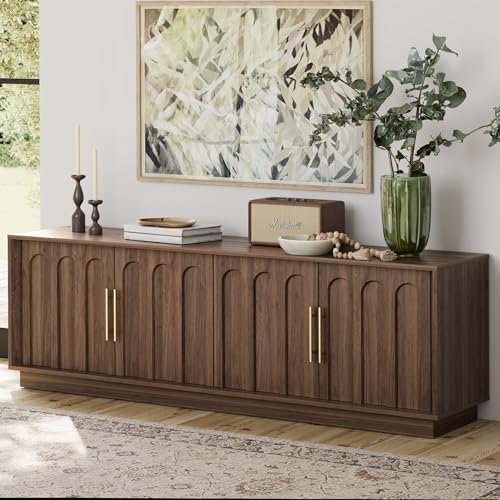
FORTUNETEC TV Stand for 75"
What it is A long walnut console built to carry a 75-inch TV without the overhang problem. Warm wood tone, enough length to keep a big screen looking planted instead of perched.
Best room for it Living rooms with a 70-inch screen or larger, where most stands leave the TV hanging off both ends. Buy the width before you fall for the finish.
The height rule: eye level wins
When you are sitting on the couch, the center of the screen should land at or just below eye level. For a standard sofa that puts the middle of the TV around forty-two inches off the floor, which means the stand itself usually wants to be low, somewhere in the twenty-four to thirty-inch range. This is why putting a big TV on top of a tall dresser is a neck-craning mistake. Low seating wants a low console.

DHH 70" MCM TV Stand with Outlets
What it is A low, seventy-inch mid-century console with splayed legs and built-in outlets, so the streaming box and the lamp and the phone charger all plug in without a power strip snaking across the floor.
Best room for it Normal-height sofas and a 55 to 65-inch TV. The low profile keeps the screen at eye level, and the outlets quietly solve the cable problem before it starts.

Fluted TV Stand, 70"
What it is A seventy-inch console with fluted cabinet doors that hide the boxes and the cables while reading as a texture choice, not a storage compromise. The ribbing is doing design work and janitorial work at the same time.
Best room for it Any room where the gear has gotten out of hand. Closed fronts, a clean top surface, and a finish that looks like furniture instead of electronics packaging.
The smartest move: buy a sideboard instead
Here is the trick most people miss. A long, low sideboard or credenza makes a better media console than most things sold as TV stands. It is built like real furniture, it has more usable storage, and when you eventually move or mount the TV on the wall, it becomes a buffet or an entryway piece instead of landfill. A console that has a second life is always the better buy.

Walker Edison 70" Curved Sideboard
What it is A seventy-inch curved-front sideboard with closed storage that works as a media console now and a dining buffet later. The curve breaks up a wall of rectangles, and the storage actually holds things.
Best room for it Open-plan rooms and anyone who suspects they will wall-mount the TV someday. Buy the furniture, let it hold the TV for now.
A media console is secretly a credenza with a job, which is exactly why the credenza earns its own section in the MCM living room guide. If you are choosing the wood tone, warm walnut and oak pull a cool room back toward cozy, the same logic behind warming up a grey living room. And once the console is sorted, the sofa in front of it is the other daily decision worth getting right, covered in how to choose a sofa. Or go straight to the full storage collection.